
Dress Form vs Mannequin vs Ghost Form: What Small Fashion Brands Actually Need
Quick answer: A dress form is for fitting and patternmaking (pinnable, often torso-only, no head or arms). A mannequin is for retail display (full body, fiberglass or plastic, not pinnable). A ghost form is invisible inside the garment for e-commerce photography (you retouch the form out or the photo looks like the clothing is floating). Most small fashion brands need either a dress form (for design work) or a hybrid like Nomad (which works for both fitting and trade show display). True ghost-mannequin photography needs a dedicated invisible form plus retouching software.
What is a dress form?
A dress form is a soft, pinnable, body-shaped form used by designers, tailors, and sewists for fitting garments, draping fabric, and patternmaking. It's almost always torso-only (no arms, legs, or head), with a stand that lets you adjust height.
Key characteristics:
- Soft surface (fabric over foam over a hard interior) so you can stick pins anywhere
- Built around a specific size (US size 4, 6, 8, etc.) or adjustable via dials
- Stand with height adjustment
- Typically 18 to 30 lbs total weight
- Price range: $100 (adjustable Dritz) to $600 (professional Wolf or Royal)
Use case: at-home sewists, fashion students, tailoring shops, and indie designers building patterns or fitting samples. Not built for transport.
Adjustable vs. fixed-size dress forms
Adjustable dress forms (Dritz Sew You, Singer Adjustable) have dials at the bust, waist, and hip that let you change measurements within a range. Good for one designer fitting various sizes. Downside: the dials can drift, the form is heavier (often 25+ lbs), and the measurements aren't as precise as a custom fixed form.
Fixed-size dress forms (Wolf, Royal, professional forms) are built to industry standard sizes (US 2, 4, 6, etc.) with exact measurements. More precise for production sample fitting. Downside: each size requires a separate form. No flexibility.
What is a mannequin?
A mannequin is a hard-bodied, full-body or partial-body form used to display finished garments in retail and trade show settings. They're built for visual display, not fitting.
Key characteristics:
- Hard surface (fiberglass, plastic, or sometimes rotomolded resin) so you cannot stick pins
- Full body (head to toe) or partial (torso plus arms/legs, or just torso)
- Built around a fixed size that mimics retail mannequin proportions
- Often more stylized than realistic (long limbs, abstract head, etc.)
- Weight: 20 to 50 lbs depending on full vs. partial
- Price range: $150 (basic fiberglass torso) to $1,200+ (premium full-body retail mannequin)
Use case: retail stores, trade show booths, window displays. Built for the customer to see, not for the designer to work on.
What is a ghost form (or ghost mannequin)?
A ghost form is a specialized mannequin used for e-commerce product photography where the goal is to show the garment as if it's being worn but with no visible body. The form gives the garment shape during the shoot, and the form is either retouched out in editing or designed to be invisible behind the fabric.
Key characteristics:
- Designed for photo-only use (not retail display, not fitting)
- Often comes in pieces that get retouched out (you photograph in pieces and composite the final image)
- Made of soft white material that doesn't show through fabric or can be removed in post-processing
- Price range: $200 (basic photo form) to $1,500+ (professional 3D ghost system)
Use case: e-commerce stores that need the "floating garment" look for product listings. Common in apparel categories like dresses, tops, and outerwear where buyers want to see the garment shape without the distraction of a body.
This is a specialized tool. If you're not running an e-commerce store with photography as a primary asset, you don't need one.
Comparison table
| Feature | Dress Form | Mannequin | Ghost Form |
|---|---|---|---|
| Primary use | Fitting, draping, sewing | Retail and trade show display | E-commerce photography |
| Pinnable | Yes | No | Sometimes |
| Body coverage | Torso only | Full or partial body | Torso (with limbs as needed) |
| Weight | 18 to 30 lbs | 20 to 50 lbs | 5 to 15 lbs (lighter for photo work) |
| Portable | No | No (usually) | No |
| Price range | $100 to $600 | $150 to $1,200 | $200 to $1,500 |
| Travel-friendly | No | Some folding options | No |
What small fashion brands actually need
Indie designer working from home
You're designing patterns, sewing samples, and fitting to your own measurements or your client's. You need an adjustable dress form. A Dritz Sew You at $150 to $250 fits most needs. You don't need a mannequin or a ghost form unless you're also selling online or doing markets.
Etsy or Shopify seller doing your own product photography
You need either a ghost mannequin (for the floating-garment look) or a real fit model (for lifestyle shots). A standard mannequin can work for product photos if you're okay with the form being visible in the image. For most small Etsy stores, a $200 to $400 ghost form is enough.
Trade show vendor or craft fair seller
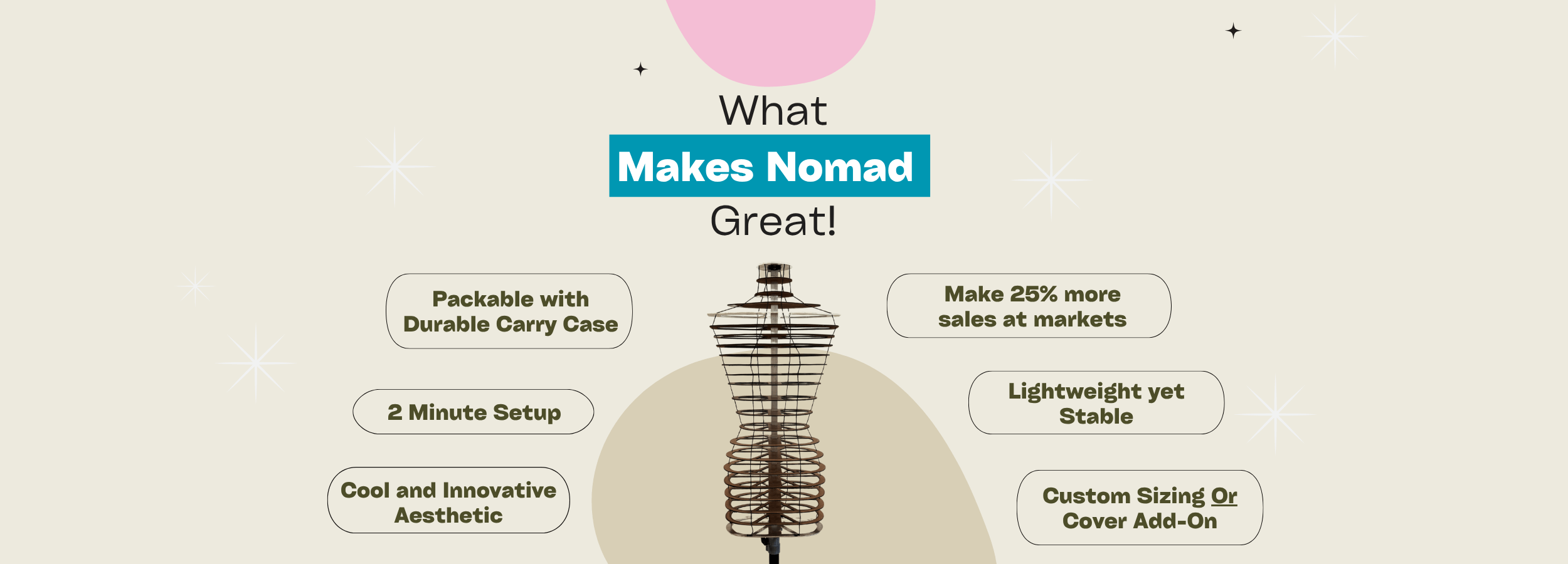
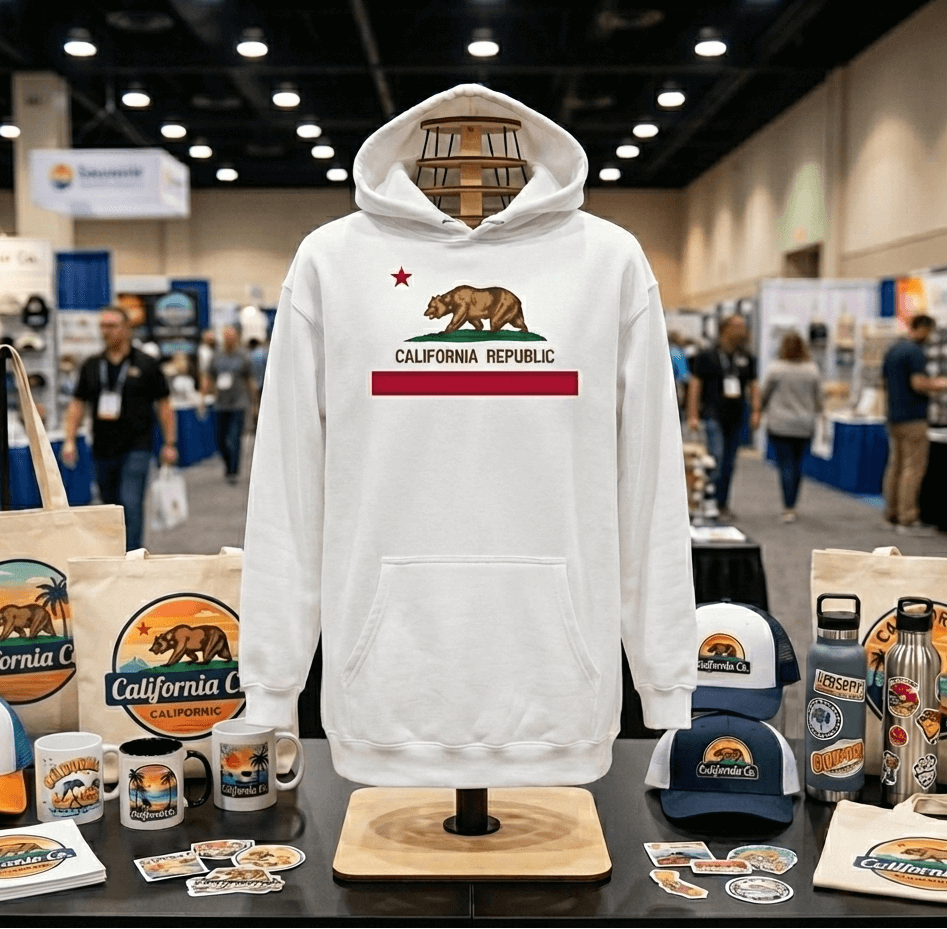
You need a portable mannequin you can take to shows. Renting a fiberglass mannequin per show costs $250 to $400 total (rental fee plus shipping plus drayage). Owning a portable mannequin like Nomad ($240) pays back in the first show. The hybrid options like Nomad work for both display at the booth and at-home fitting between shows.
Boutique retailer with a physical storefront
You need a traditional mannequin (or several) for window and floor displays. Fiberglass forms work because they sit in one place. Weight isn't an issue. Budget $300 to $800 per form for retail-quality.
Wholesale brand exhibiting at MAGIC, NYNOW, or Coterie
You need a portable mannequin you can fly with. The on-site rental at MAGIC is $250 to $400 per show; shipping your own fiberglass is similar. A portable carry-on-sized form like Nomad eliminates both costs.
The hybrid option: a portable mannequin that pin-functions like a dress form
If you fit any of these descriptions, you can avoid buying separate dress forms and mannequins:
- You design at home and sell at trade shows or craft fairs
- You're a small fashion brand on a budget
- You don't have studio space for multiple forms
A wood-ring portable mannequin like Nomad combines the pinnability of a dress form (the wood rings hold pins between them) with the silhouette and portability of a mannequin. From August 2026, the optional neoprene cover adds full-surface pin coverage for traditional dressmaker-style fitting work.
The trade-off: Nomad is built around a fixed size (US Female S 4/6 or Male M), not adjustable. For exact-fit production work, an adjustable dress form is still better. For 80 percent of small fashion brand needs (display, basic fitting, sample shape work, photo background), Nomad replaces both a dress form and a mannequin at a single price point.
What to skip if you're on a budget
Most new fashion brands over-buy on equipment. You probably do NOT need:
- A full retail mannequin if you're not running a storefront
- A ghost form if you're not doing high-volume e-commerce photography
- Multiple adjustable dress forms in different sizes (one is usually enough)
- An expensive fiberglass form if you're traveling to any trade shows (it's too heavy)
Start with one tool that covers your most frequent use case. Add a second tool only when the first is consistently the wrong fit for what you're doing.
Recommendation
- At-home sewist or fashion student: Adjustable dress form (Dritz, $150 to $250)
- Boutique retailer: Traditional fiberglass mannequin ($300 to $800)
- E-commerce seller doing your own product photos: Ghost form ($200 to $400) plus retouching software
- Trade show vendor or craft fair seller: Portable mannequin like Nomad ($240)
- Small brand doing all of the above: Portable hybrid like Nomad, plus a basic ghost form if you photograph often
What we recommend for trade show vendors
If you're doing trade shows, craft fairs, or pop-ups, a portable mannequin handles the display work plus light fitting work. Shop the Nomad Mannequin (Female US S 4/6 or Male US M, $240 each). For more on cost trade-offs, see the rent vs buy ROI breakdown, or compare against other options in our guide to the 7 best portable mannequins for 2026.

.%20A%20mannequin%20is%20for%20retail%20display%20(full%20body,%20fiberglass%20or%20plastic,%20not%20pinnable).%20A%20ghos...)