
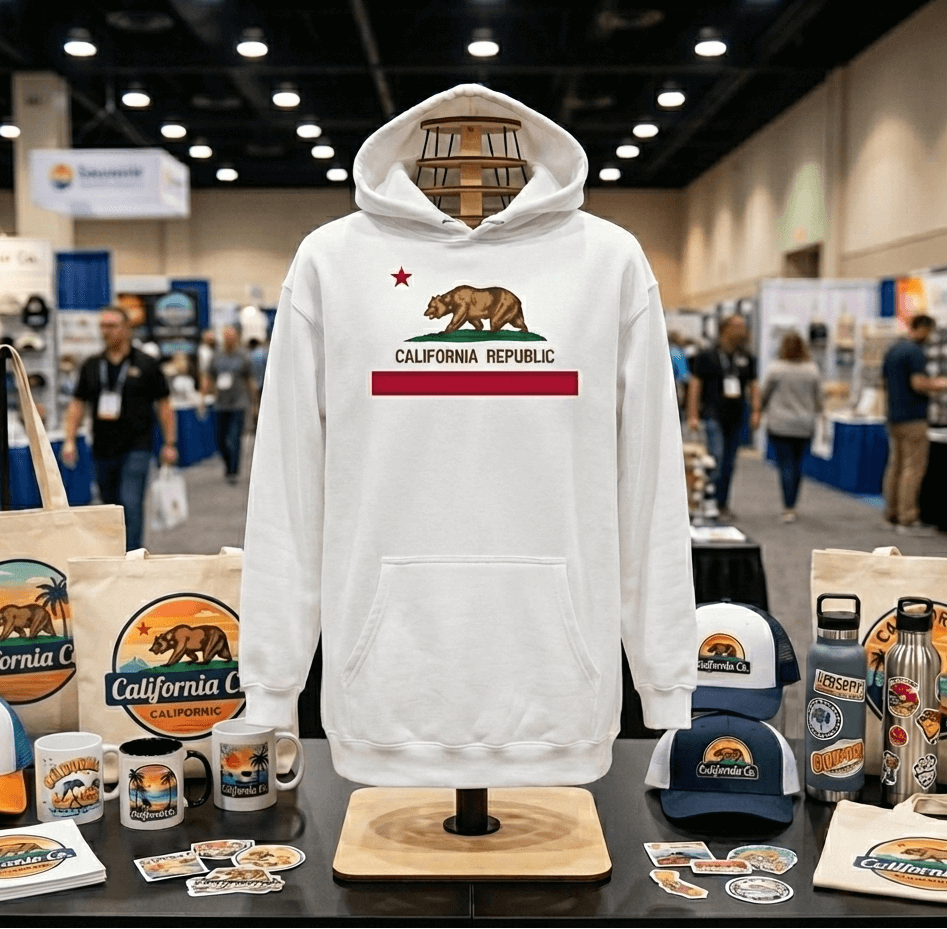
First-Time Trade Show Vendor Checklist: What to Pack for Your Apparel Booth
Quick answer: The short version of what every first-time apparel trade show vendor should pack: one or two portable mannequins (Nomad fits as airline carry-on), 2 to 4 hero pieces freshly steamed, line sheet and lookbook, business cards, order forms, clip lights, an extension cord, a steamer, comfortable shoes, snacks, and a notebook. The longer version below covers what catches first-timers off guard and what experienced vendors keep in their show bag year after year.
What the show usually does NOT include
Most trade show booth packages (MAGIC Las Vegas, NYNOW, Coterie, ASD Market Week) give you pipe-and-drape walls, one table, two chairs, an ID sign, and a trash can. That is it.
What they almost never include and what catches first-timers off guard:
- Mannequins (rentals are $250 to $400 per show on-site)
- Lighting (overhead venue lighting is harsh and flattens fabric)
- Carpet or floor covering
- Wi-Fi or any electrical outlet (often $150 to $400 extra)
- Drayage from loading dock to your booth ($50 to $150 per piece if you ship freight)
- Materials to hang or attach signage (no thumbtacks allowed on draped walls; you need clips or zip ties)
The core packing list (in order of importance)
1. Mannequin or two
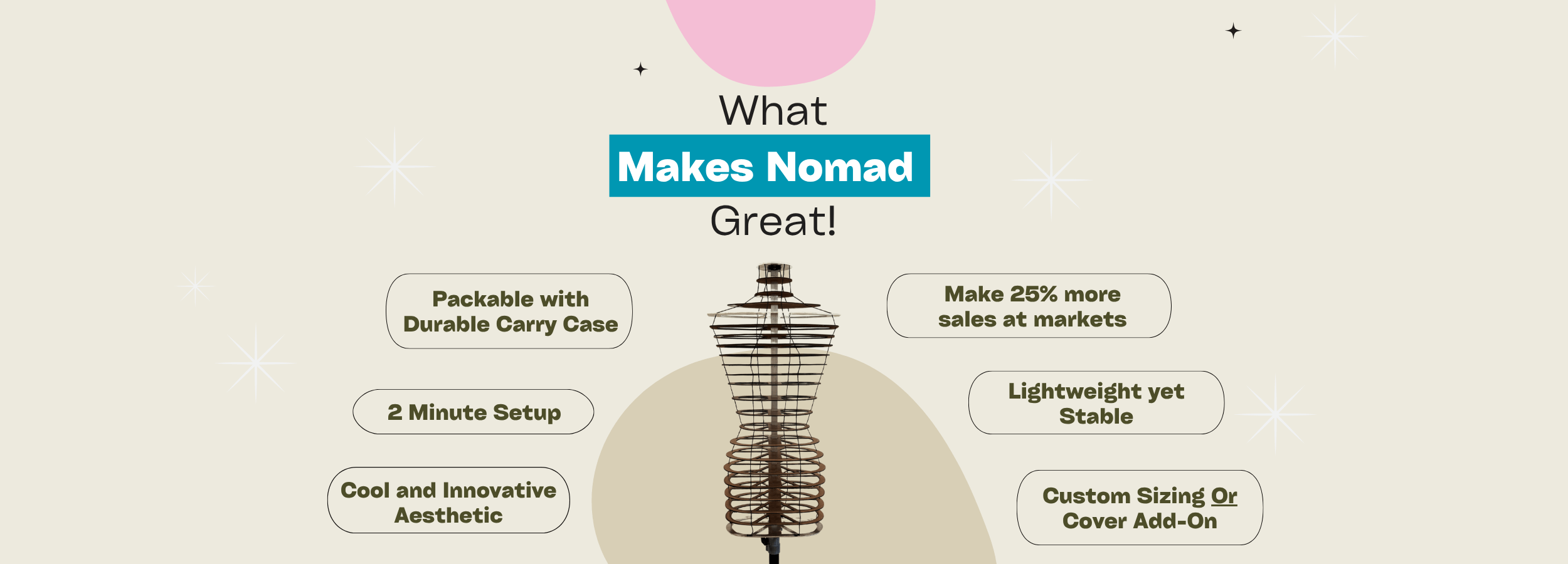
One mannequin is the minimum. Two is better if you can carry them. A portable mannequin like Nomad fits as airline carry-on at 12 pounds and sets up in 2 minutes. Avoid on-site rentals if you can; they cost more than buying your own and you have no control over the sizing or style.
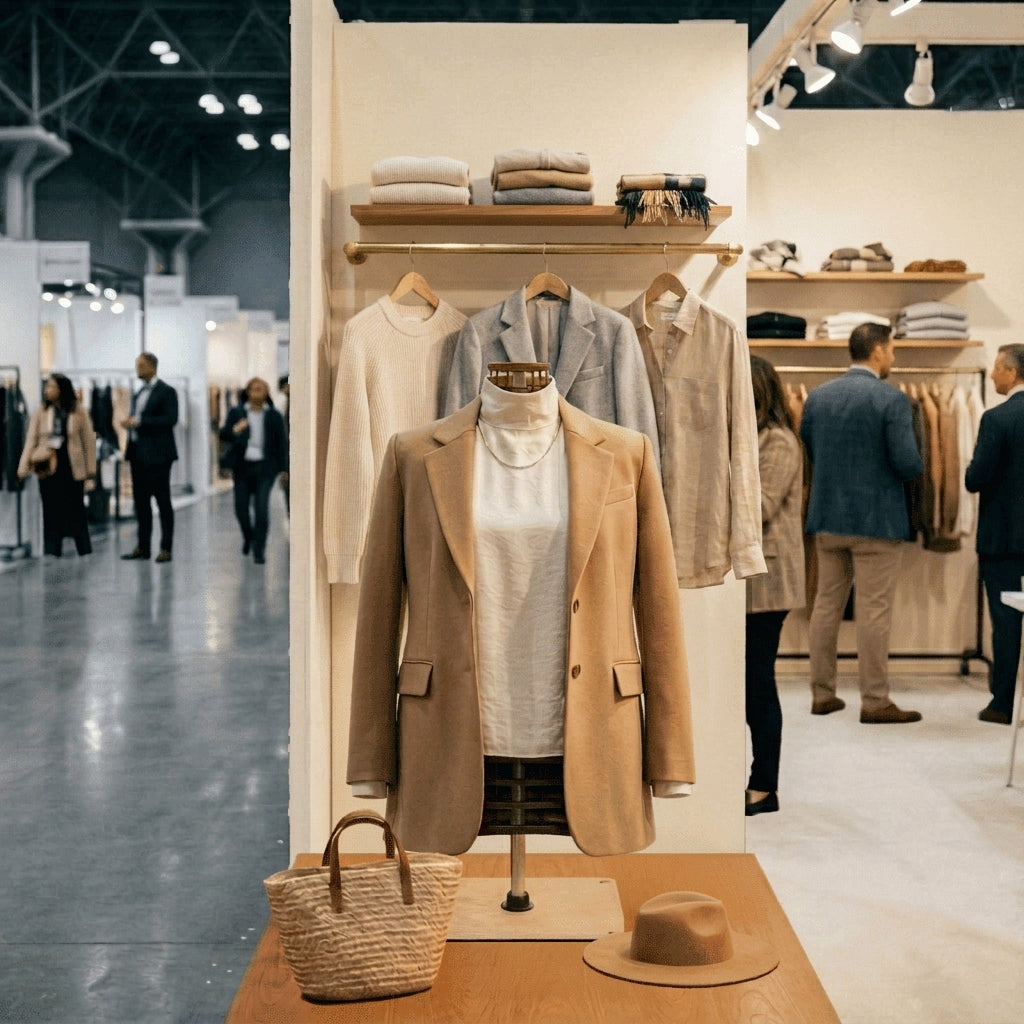
Sample dressed on the mannequin: pick your hero piece, the one that will stop buyers walking past your booth. Not your full catalog.
2. Hero samples
2 to 4 sample garments, steamed and on hangers in a garment bag. These are the pieces the mannequin will wear and the pieces buyers will touch.
Choose hero pieces by these criteria:
- Visual impact (will it stop a buyer walking 8 feet away)
- Margin (lead with the piece that has the best wholesale margin if it converts)
- Range showcase (the piece that best represents your aesthetic so buyers extrapolate your full line)
3. Line sheet and lookbook
50 to 100 printed copies. Buyers want to take something home, even in the era of email follow-up. Include: brand name, contact info, product photos with style numbers, wholesale prices, MOQs (minimum order quantities), and shipping lead time.
4. Business cards
500 minimum. You will give out more than you expect. Spend the extra $20 to get them printed on thicker stock; thin cards land in the trash.
5. Order forms
Digital (on your phone or tablet with a form like Brandboom, NuOrder, or even a Google Form) plus a paper backup. Some buyers want to write physical orders on the spot; some want emailed templates after the show.
6. Booth signage
One clear sign with your brand name, category, and a single differentiator. Examples: "Bridal jumpsuits, sizes 0 to 24" or "Made-in-NYC men's tailoring". A compact retractable pop-up banner (about $80) works for most 10x10 booths. Ship it ahead or carry it in a tube.
7. Lighting
2 to 4 warm-white LED clip lights (3000K to 3500K) pointed at your mannequin. About $30 to $80 per light at most hardware stores. Avoid daylight or cool-white bulbs (5000K and above); they wash out fabric color.
8. Power
Extension cord (15 to 25 feet) plus a power strip. Even if your booth comes with one outlet, you will want it 6 feet away from where it sits. Check the show rules; some require commercial-rated cords.
9. Steamer
A handheld travel steamer like Conair Turbo ExtremeSteam. Wrinkles read as cheap on a display. Steam between days and refresh samples buyers have handled.
10. Mobile POS
Square reader or PayPal Zettle. Even if you are focused on wholesale orders, some buyers want to place a sample order in person.
The boring stuff first-timers forget
- Comfortable shoes. You will stand for 8 hours a day. Not heels. Not new shoes. Broken-in flats or supportive sneakers.
- Snacks and water. Convention center food is expensive ($15 for a soggy sandwich) and lines are long. Protein bars, fruit, and a refillable water bottle save your sanity.
- A notebook. Write buyer notes (what they asked about, follow-up timing, special requests). You will not remember after talking to 50 buyers in one day.
- Phone charger and power bank. Your phone will die. Bring a backup.
- Tape, scissors, zip ties. Booth fixes happen.
- Sharpie and pen. Order forms, sample tags, last-minute pricing notes.
- Cash for tips. If you use union labor at the venue, small cash tips help.
- Hand sanitizer and tissues. Shaking hundreds of hands, talking nonstop.
- Cough drops. Your voice will go by day 2.
What to ship ahead vs. carry
Most first-time vendors over-ship and under-pack. The expensive freight runs add up fast at the venue.
Ship ahead 1 to 2 weeks before:
- Booth signage and pop-up banner
- Printed materials (line sheets, lookbooks, business cards)
- Carpet or floor covering if you need one
- Large props or display fixtures
Carry on the plane (or drive with you):
- Portable mannequin (Nomad fits in carry-on)
- Sample garments in a garment bag
- Laptop, tablet, phone, chargers
- Lighting if it fits
- Personal items (clothes, toiletries)
Shipping ahead avoids drayage fees on your essentials. Carrying critical items means you have them even if a freight shipment gets lost or delayed.
What new vendors waste money on
- Over-printed lookbooks. 100 copies is plenty for your first show. You can always print more after you see how the show goes.
- Premium booth flooring. The venue carpet is fine for your first show. Upgrade after you know if MAGIC or NYNOW is the right show for your brand.
- Custom-built booth structures. Pop-up banners and pipe-and-drape work fine for first-timers. Custom builds are $5,000 to $20,000 and only make sense after you have proven the show.
- Renting a mannequin instead of buying. One rental costs more than buying a portable Nomad.
The realistic budget for a first-time vendor
Rough cost for a first MAGIC Las Vegas or NYNOW exhibitor, all-in:
- Booth fee: $3,500 to $6,000
- Electricity, Wi-Fi: $300 to $500
- Drayage: $100 to $300
- Travel (flight plus 3 nights hotel): $1,200 to $2,500
- Mannequin (buy once): $240 to $290 (Nomad)
- Lighting, signage, printing: $300 to $500
- Samples, line sheets, business cards: $200 to $400
- Food, transport, miscellaneous: $300 to $500
Total: $6,140 to $11,000 for your first major show. A portable mannequin saves the $250 to $400 per-show rental cost and pays for itself in show one.
What we recommend
For your first apparel trade show, focus the budget on the things buyers actually see: a good mannequin with your hero sample, clean signage, and proper lighting. Skip the custom booth, the expensive flooring, and over-printed materials. Shop the Nomad Mannequin for the portability and one-show payback, or read the renting vs. buying breakdown for the math.
,%202%20to%204%20hero%20pieces%20freshly%20steamed,%20...)